Emerald is one of the world's most admired precious gemstones, celebrated for its rich green color, rarity, and timeless beauty. But what makes one emerald worth hundreds of dollars while another can command thousands or even much more?
Understanding what determines the value of an emerald is essential whether you are buying an emerald gemstone, comparing emerald prices, building a collection, or simply learning more about gemstones.
Unlike diamonds, emeralds are not valued by a simple universal grading formula. Instead, emerald value depends on several characteristics, with color generally considered the most important factor. Clarity, transparency, cut, carat weight, treatment, origin, and overall quality also play important roles.
What Makes an Emerald Valuable?
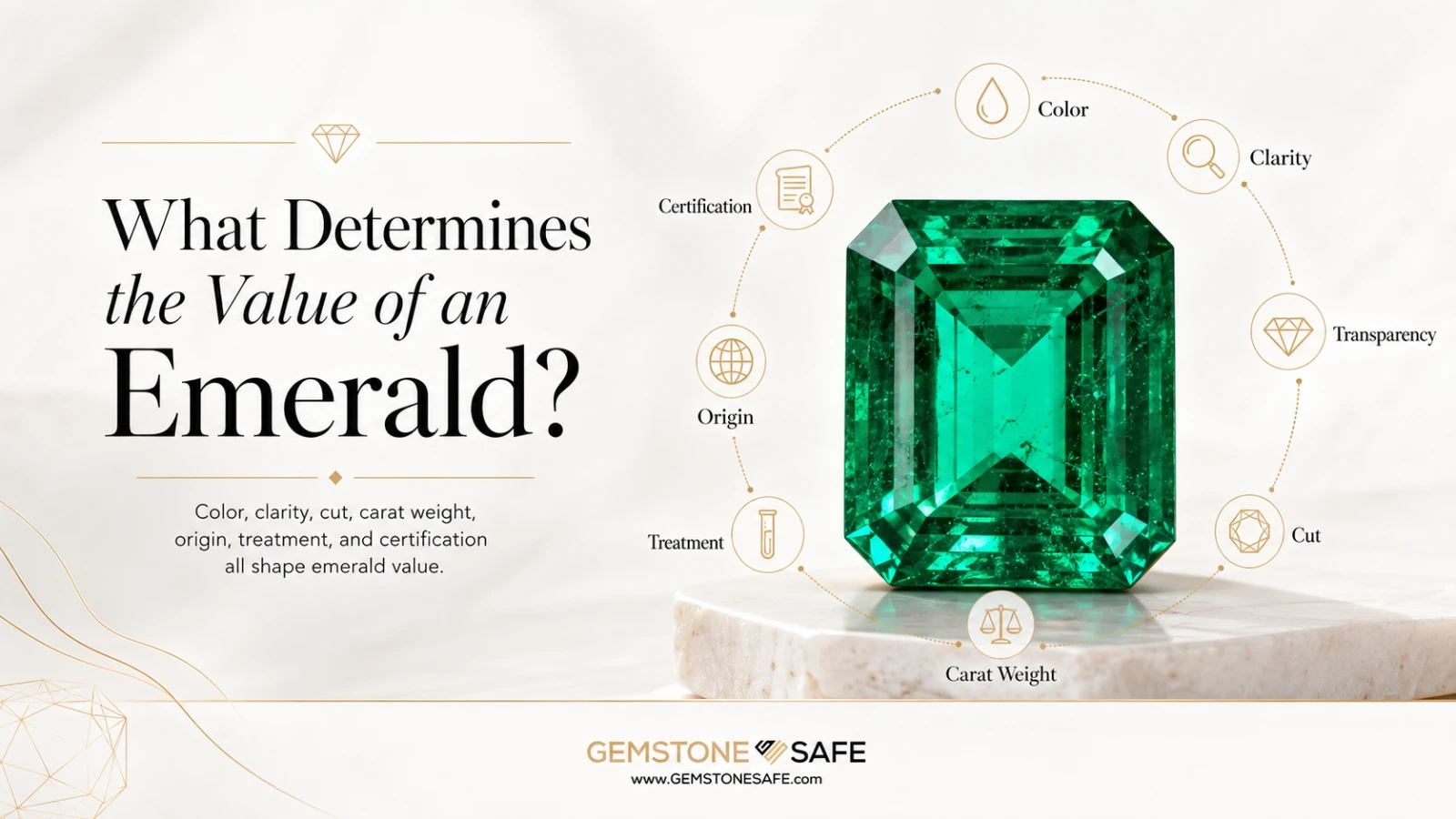
The value of an emerald is determined by the combination of its most important quality characteristics. The primary factors include:
- Emerald color
- Emerald clarity and transparency
- Emerald cut and craftsmanship
- Carat weight and size
- Natural or treated status
- Geographic origin
- Certification and documentation
A high-quality emerald usually has an attractive, vivid green appearance, good transparency, desirable proportions, and characteristics that make it visually appealing.
1. Emerald Color Is the Most Important Value Factor
When determining emerald gemstone value, color usually receives the greatest attention.
The most desirable emeralds typically display a bluish-green to pure green hue, bluish green emerlald with strong saturation and a tone that is neither excessively light nor overly dark. The finest emeralds can show an intense, evenly distributed green color with excellent transparency.

Emerald color is influenced by trace elements such as chromium, vanadium, and iron. Differences in these elements contribute to the wide range of green shades found in natural emeralds. In general, an emerald with attractive, vivid, evenly distributed green color can command a significantly higher price than one with weak saturation or an overly dark appearance. This is why emerald color and emerald price are closely connected.
2. Emerald Clarity and Transparency Affect Its Value
Emeralds are different from diamonds when it comes to clarity. Natural emeralds commonly contain visible inclusions, and these characteristics are traditionally accepted as part of the gemstone's identity. These internal features are often called "jardin," a French word meaning "garden," because some emerald inclusions resemble foliage or garden-like patterns. However, not all inclusions have the same effect on emerald value.
If inclusions significantly reduce transparency or affect the gemstone's durability, they can lower its value. On the other hand, emeralds with exceptional transparency and minimal eye-visible inclusions are rare and can be highly valuable. Therefore, when evaluating emerald clarity, it is important to consider not only how many inclusions are present but also their size, position, appearance, and effect on transparency.
3. Emerald Cut Can Influence Beauty and Price
The cut of an emerald is another important factor when determining its value. The classic cut of a rectangular emerald step cut with cropped corners is particularly associated with emerald gemstones. However, emeralds can also be fashioned into oval, cushion, pear, round, and other shapes.
A skilled cutter aims to maximize the gemstone's color and visual appeal while minimizing the effect of fractures and inclusions. Poor cutting can result in unnecessary weight loss, weak color, or reduced brilliance. A well-cut emerald should have attractive proportions, balanced symmetry, good polish, and a pleasing appearance. For this reason, emerald cut quality can influence both its beauty and market value.
4. Emerald Carat Weight and Size Matter
Like many gemstones, emerald price is influenced by carat weight. However, two emeralds with the same carat weight can have dramatically different values because quality remains critical. As emerald size increases, high-quality material becomes more difficult to find. Therefore, the price per carat can rise substantially for larger emeralds of exceptional quality.

For example, a large emerald with excellent color and transparency may be considerably more valuable than a larger stone with pale color and heavy inclusions. When considering emerald price per carat, never evaluate weight alone. Color, clarity, transparency, cut, treatment, and origin must also be considered.
5. Natural Emerald vs. Treated Emerald
Treatment is another important consideration when evaluating natural emerald value. Many emeralds have fractures or fissures that can be treated to improve their apparent clarity. The presence and degree of clarity enhancement should therefore be disclosed when purchasing an emerald.
Gemological laboratories can examine emeralds and report detectable treatments. GIA, for example, can indicate detectable treatments and provide information about whether an emerald is natural or laboratory-grown. Because treatment can influence an emerald's market desirability, buyers should always ask whether an emerald has been treated and what type of treatment has been performed.
6. Does Emerald Origin Affect Its Value?
Emerald origin can influence value, particularly when a gemstone comes from a historically important or highly regarded source. Colombia and Zambia are among the best-known emerald-producing regions. Colombian emeralds are often associated with warmer, intense green colors, while Zambian emeralds are often associated with cooler bluish-green colors. However, quality varies within every mining region, so origin alone does not automatically make an emerald more valuable.
For exceptional gemstones, an independent laboratory origin report can add important provenance information.
In other words, a Colombian emerald is not automatically more valuable than a Zambian emerald. The actual quality of the individual gemstone remains crucial.
7. Emerald Certification Can Increase Buyer Confidence
When purchasing a valuable emerald, certification can provide important information about the gemstone.
An emerald report may identify characteristics such as:
- Natural or laboratory-grown status
- Carat weight
- Measurements
- Shape and cutting style
- Color
- Detectable treatments
- Geographic origin, when an origin opinion is possible
A reputable emerald certification can help buyers understand what they are purchasing and compare gemstones more confidently. For higher-value emeralds, professional documentation is particularly important.

How Much Is an Emerald Worth?
There is no single answer to "How much is an emerald worth?" Emerald prices can range from relatively affordable to extremely high, depending on quality. GIA notes that emerald values can range from a few dollars to tens or even hundreds of thousands of dollars per carat. The biggest mistake is assuming that carat weight alone determines emerald price. A smaller emerald with exceptional color, transparency, clarity, and provenance can be worth far more than a much larger emerald of lower quality.
How to Choose a Valuable Emerald
If you are buying an emerald, focus on the complete picture rather than one characteristic.
Look for:
- Strong, attractive green color
- Good transparency
- Acceptable natural inclusions
- Quality cutting and symmetry
- Appropriate carat weight
- Clearly disclosed treatments
- Reliable certification for valuable stones
- Verified origin when provenance is important
Most importantly, compare emeralds based on overall quality rather than simply searching for the largest or darkest stone.
Final Thoughts on Emerald Value!
So, what determines the value of an emerald?
The answer lies in a combination of color, clarity, transparency, cut, carat weight, treatment, origin, and certification. Among these factors, color is generally the most important consideration, particularly when an emerald displays a vivid green emerald, attractive green with good transparency.
Whether you are interested in a natural emerald, Colombian emerald, Zambian emerald, emerald jewelry, or a loose emerald gemstone, understanding these value factors can help you make a more informed decision. An emerald's beauty is not determined by size alone. Its color, natural characteristics, craftsmanship, and history all contribute to what makes each gemstone unique and ultimately, to what the market may be willing to pay for it.