January’s Birthstone, Chosen for a Personal Reason
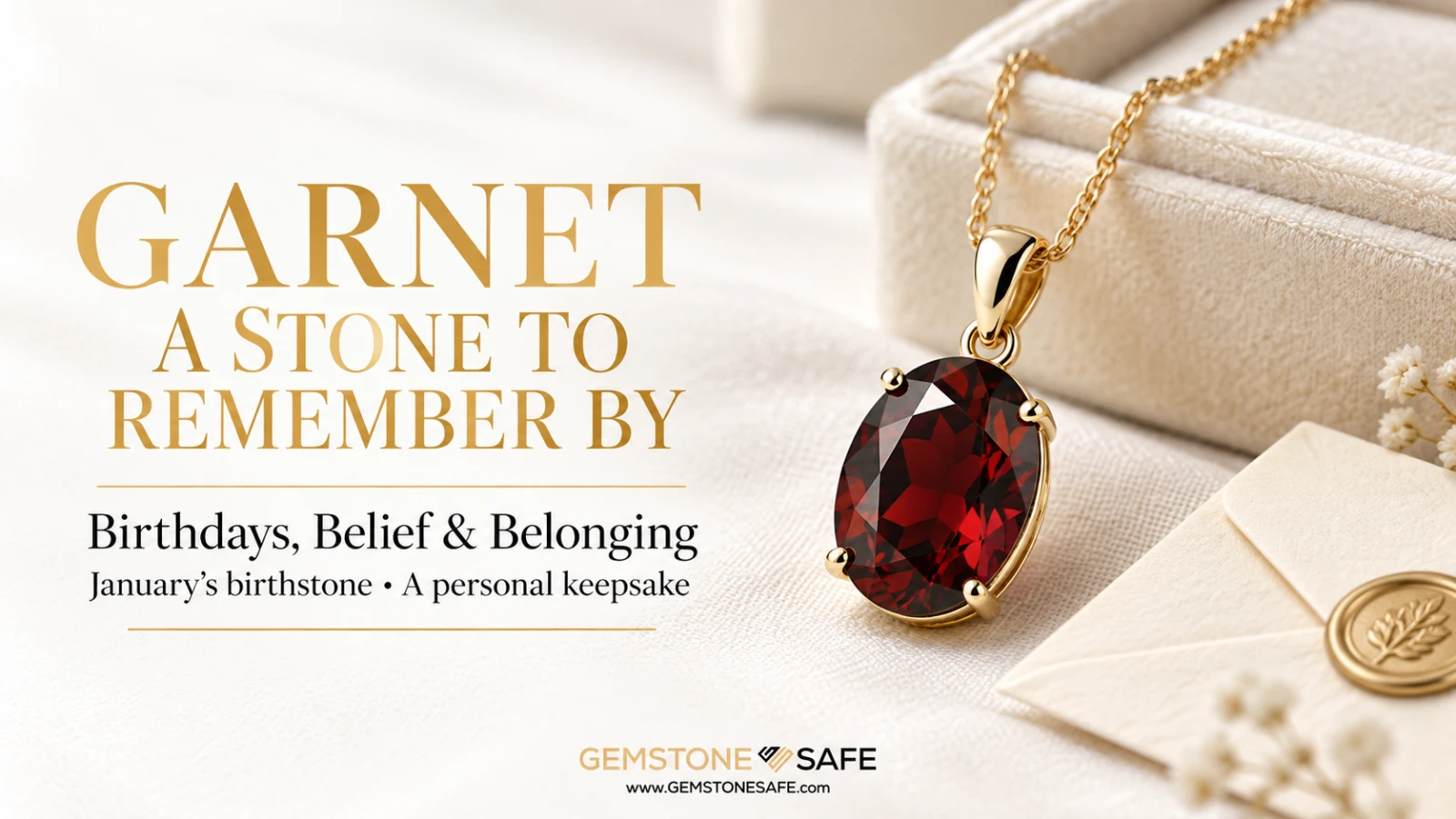
Garnet is January’s birthstone in the contemporary birthstone convention presented by GIA, which also identifies it with the second wedding anniversary. Those associations give a gemstone an immediate connection to a date, a person, or a shared milestone. They do not prescribe how a wearer must feel about it.
A January birthday gift might celebrate a child’s arrival, recognize a lifelong friendship, or simply reflect someone’s favorite color. An anniversary piece might recall the first years of a marriage. The meaning begins with the occasion and becomes more specific through the people involved.
That distinction runs through garnet’s story. Historical jewelry, inherited beliefs, and modern crystal traditions each offer ways to interpret the gemstone. Understanding where those interpretations come from allows us to appreciate them without treating every appealing story as an established historical or scientific fact.
The Pomegranate Connection and the Limits of a Name
GIA connects the name garnet with the medieval Latin term granatus and the resemblance of red garnets to pomegranate seeds. The visual comparison remains evocative: small, richly colored stones can recall the translucent seeds revealed when the fruit is opened. The name invites poetic associations, but resemblance alone cannot establish what a particular ancient wearer believed. It would be a leap to take every story about pomegranates and present it as a documented garnet tradition.
Older gemstone names need similar care. GIA notes that “carbuncle” could describe red garnet but was also applied to other red stones. A historical passage mentioning a carbuncle therefore does not necessarily identify a garnet in the modern mineralogical sense. For a reader interested in gem lore, this is a useful habit: distinguish the language of an old text from the identification of a surviving object. Both can be fascinating, but they answer different questions.
Ancient Garnet: Ornament, Identity, and Authority
GIA records garnet necklaces among the possessions buried with Egyptian pharaohs and describes carved garnets in Roman signet rings used to seal important documents. These examples show the gemstone serving more than one purpose: personal adornment, an object valued enough to accompany the dead, and a practical tool associated with authentication.
A signet ring is particularly revealing. Its engraved surface carried an image that could be impressed into sealing wax. The stone was part of a recognizable act of identity and authority, rather than merely an attractive accessory. These uses offer a richer account than assigning one universal meaning to garnet. A royal necklace and a seal ring belonged to different settings and could have mattered to their owners for different reasons.
For a modern wearer, the historical connection can be an appreciation of craftsmanship or of jewelry’s role in human relationships. There is no need to invent a continuous tradition linking every ancient use to today’s gift-giving customs.
Garnet and Gold in Early Medieval Craftsmanship
A sixth-century Frankish disk brooch in the Metropolitan Museum of Art provides a specific example of garnet’s place in luxury ornament. The museum describes a technique called cloisonné: small metal compartments were arranged into patterns and fitted with thin translucent garnets over textured gold foil. Its catalog identifies the brooch’s materials as gilded silver, garnets, glass, and pearl.
The construction makes the relationship between material and design visible. The garnets were shaped for their places in the pattern, while the foil contributed to the appearance beneath them. The result depended on the coordinated work of metalworker and stone worker.
This object offers direct evidence of how garnet was used. It does not, by itself, tell us that its wearer expected a healing effect or supernatural protection. That is part of the pleasure of looking closely at historical jewelry: the details we can verify are already compelling. A small brooch can preserve evidence of skill, taste, and investment in adornment without requiring a speculative explanation for every design choice.
Bohemian Garnet and the Art of Wearing Red
The Victorian-era pyrope hair comb described by GIA and held by the Smithsonian provides another chapter. Its garnets came from Bohemia, now within the Czech Republic, and were fashioned as rose cuts, with faceted upper surfaces and flat bases. The arrangement turns numerous red stones into a unified ornament. Unlike the metal cells of the Frankish brooch, this piece presents garnet through a later jewelry vocabulary. Comparing them highlights how the same broad gemstone family can participate in very different fashions.
For someone drawn to antique-inspired jewelry, that history offers concrete points of interest: repeated stones, the relationship between metal and color, and the outline of the finished piece. Those details can guide a contemporary design without implying that a new jewel is an antique. If an inherited piece resembles historic Bohemian jewelry, keep resemblance separate from attribution. Family memories are worth recording, but a date, maker, or geographic identification should remain uncertain until supported by appropriate evidence.
Birthstone Meaning Does Not Require a Red Stone
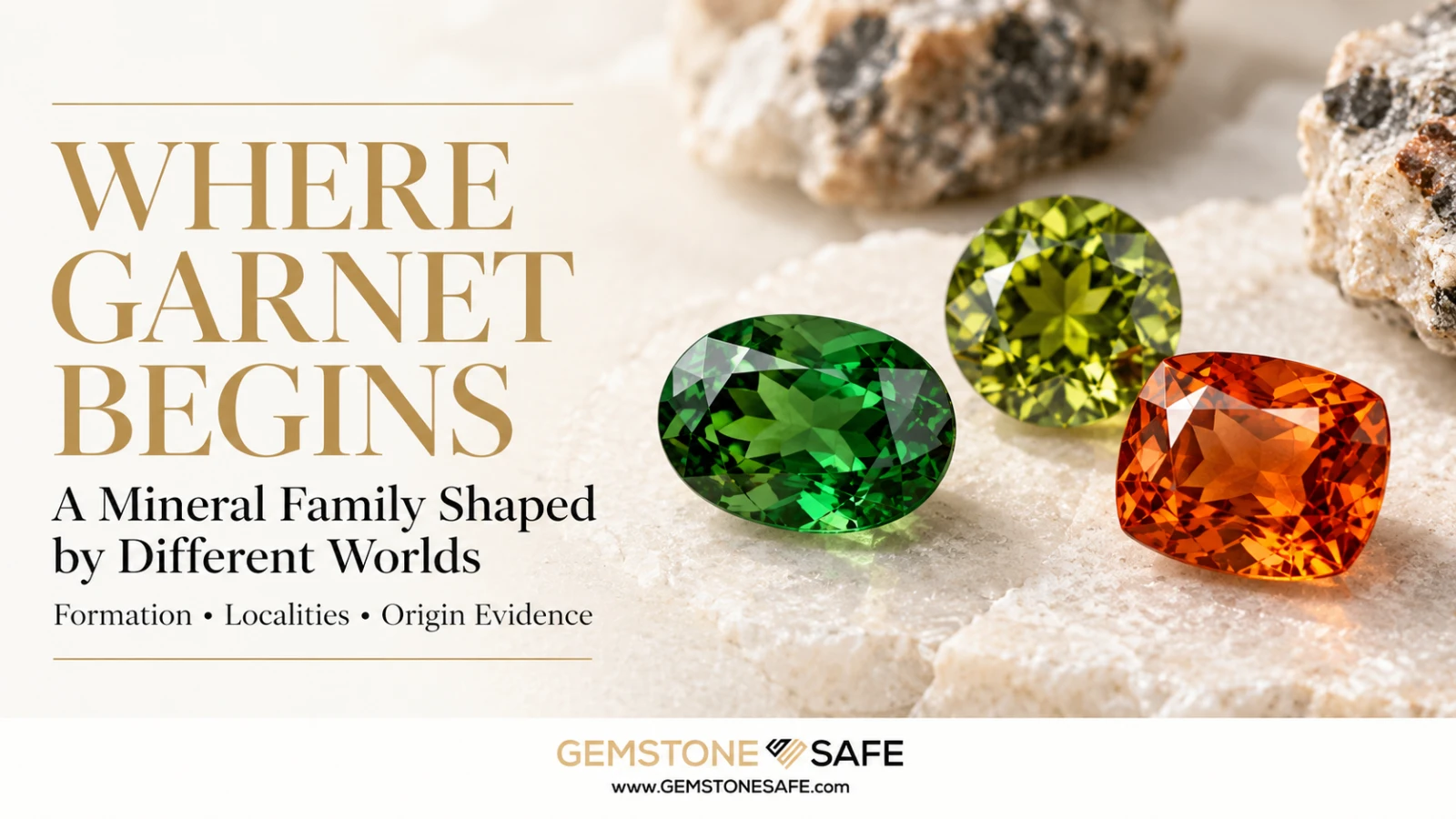
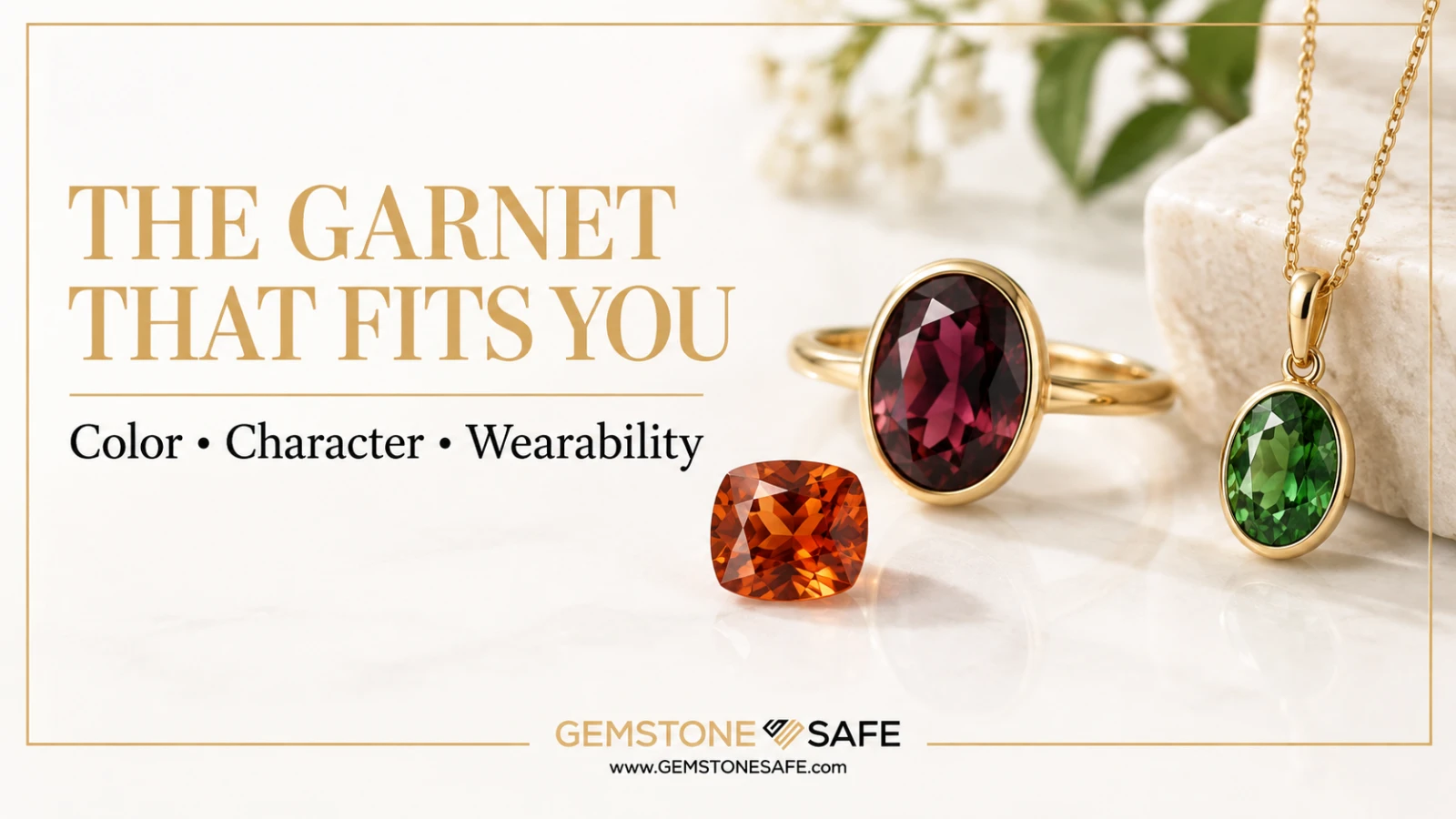
Garnet is a group of related minerals whose compositions vary. Its gem palette includes greens, oranges, pinkish oranges, and purplish reds, as well as unusual blue examples. Tsavorite and demantoid are green garnets, spessartine is associated with orange, and rhodolite with purplish red.
This diversity gives January jewelry considerable room for personal choice. A recipient who rarely wears red may find a green or orange garnet more expressive of their own taste while retaining the birthstone connection. You can also choose a color for a private reason. Green might recall a shared garden, orange a memorable landscape, or purplish red a favorite piece of clothing. These are suggested personal interpretations, rather than a fixed historical code.
A meaningful gift need not satisfy somebody else’s color symbolism. Consider what the recipient already enjoys, then explain your choice in a short note. That explanation can make the connection more memorable than a generic list of promised gemstone benefits.
What Contemporary Metaphysical Traditions Attribute to Garnet
Modern crystal-belief writing associates garnet with vitality, commitment, protection, and creative energy. For example, the commercial crystal reference Crystal Vaults links red almandine with grounding and the first chakra, grossular with abundance, and spessartine with confidence and creativity. These descriptions document the beliefs promoted by that source; they are not scientific findings or proof of a single ancient tradition.
Within such practices, “grounding” usually describes a desired feeling of steadiness or connection. “Energy” is used in a spiritual or symbolic sense, rather than as a measured gemological property. Chakra associations likewise belong to the belief framework in which they are presented.
A reader may find those ideas personally meaningful. The careful way to express that interest is to say that a gemstone represents confidence or serves as a reminder of commitment. Saying it reliably produces confidence, protects the wearer, or attracts prosperity makes a different claim. The distinction is especially useful when giving jewelry. A personal message can communicate affection and intention without promising an outcome that the stone cannot be shown to deliver.
Historical Healing Beliefs and Scientific Evidence
GIA’s birthstone account describes historical beliefs that gems such as garnet could relieve inflammatory illness or soothe anger. These are part of the history of belief, not established treatment effects. Research on crystal healing also needs to be described precisely. A randomized study published in 2025 compared rose quartz with a visually matched placebo in 138 adults over 14 days. It found no crystal-specific advantage on its primary anxiety outcomes. The study examined rose quartz, not garnet, so it should not be presented as a direct garnet trial. It does illustrate why perceived benefit must be tested against expectation and comparison conditions.
Traditional healing associations are not established medical benefits. Garnet should not be presented as preventing or treating physical or mental health conditions.
Someone can treasure a ring, enjoy a quiet moment while looking at it, or associate it with reassurance from a loved one. Those experiences do not establish a therapeutic property of the mineral. Keeping that boundary clear allows an appreciation of symbolism without converting it into a health promise.
How to Give Garnet a Meaning That Lasts
Start with a memory or an intention you can explain. For a January birthday, the month provides the link. For an anniversary, you might choose a design that refers to a place you visited together. For a graduation or other achievement, garnet can be your chosen marker of the occasion without claiming that the association is an ancient custom. A message such as “I chose this to remember the year you began your own business” is specific and honest. It tells the recipient something about your attention to their life.
The format of the jewelry matters too. Ask whether they prefer earrings, a pendant, or a ring, and whether a bold or understated design suits them. A meaningful object is easier to enjoy when it also fits the wearer’s taste. Keep the personal story alongside the practical record. Note the occasion, date, giver, and known gemstone identity. Retain available purchase documents separately. If the piece is later passed on, those details help the next owner understand which parts of its story are documented and which are family recollection.
An Heirloom’s Story Can Begin Now
A new garnet jewel does not need a royal connection or an elaborate legend to become important. You can begin its record with a photograph and a few sentences about why it was chosen. For an older family piece, invite relatives to record what they remember in their own words. Preserve differing accounts rather than forcing them into one confident narrative. “Believed to have belonged to our grandmother” is a useful statement when that is the extent of the evidence. This approach gives future owners something valuable: an honest account they can add to. The gemstone’s personal significance can grow through occasions and relationships, while its identification and history remain open to careful examination.
Choose the Story You Want to Carry
Garnet’s place in jewelry includes birthstone conventions, skilled historical craftsmanship, contemporary spiritual interpretations, and the meanings created by individual wearers. Knowing which kind of story you are telling makes it more thoughtful and more credible.
For a January birthday, second anniversary, or personal milestone, contact GEMSTONESAFE to discuss your preferred garnet color, jewelry style, and budget. Share the occasion and what you would like the piece to represent, so beauty and personal significance can guide the conversation.