For centuries, buying a gemstone meant standing in front of a dealer, holding the stone up to natural light, and trusting your own eyes or a trusted middleman's. Today, an increasing share of that transaction happens on a screen. The shift toward online gemstone ecommerce isn't a passing trend; it's a structural change in how the industry operates, and understanding where it's headed matters for buyers and sellers alike.
Current Practices in Gemstone Ecommerce
Most gemstone ecommerce today still borrows heavily from offline habits. Sellers post photos or short videos of rough or cut stones on marketplaces, private websites, or social platforms, often supplemented by live-selling formats where buyers can request the seller to rotate a stone or hold it up to different light sources in real time. Facebook groups, Instagram, and dedicated gemstonesafe marketplaces have become informal trading floors, while a smaller segment of higher-value transactions still routes through established auction houses and certified dealers who have simply added a digital storefront to existing relationships.
Trade Volume Is Growing Steadily
The broader gemstone market is valued in the tens of billions of dollars globally and continues to expand at a healthy mid-single-digit annual growth rate, driven by rising demand for colored stones, expanding jewelry retail, and growing interest from younger buyers who favor unique, story-driven pieces over traditional diamond-centric jewelry. Within that larger market, the online segment is consistently cited as the fastest-growing channel, expanding meaningfully faster than offline 25retail as more buyers become comfortable making significant purchases without physically handling the stone first.
Major Issues Facing the Industry
Growth hasn't solved the industry's core problems in some ways, it has amplified them. Misrepresented treatments, undisclosed enhancements, inconsistent grading standards, and inflated or vague origin claims remain widespread. Photography and lighting can flatter a stone far beyond how it will look in person, and the sheer volume of listings makes it easy for facet quality or lower-quality material to slip past buyers who don't know exactly what to look for.
Seller and Buyer Challenges
Buyers face an obvious challenge: distance. Without holding a stone, judging clarity, color consistency, and cut quality is difficult, and returns on international purchases are often costly or impossible. Sellers face a quieter but equally real challenge trust. Even honest sellers must work harder to convince buyers a stone is exactly as described, competing in a marketplace where reputation is hard to verify and bad actors can damage confidence in the category as a whole.

The Future of Gemstone Ecommerce
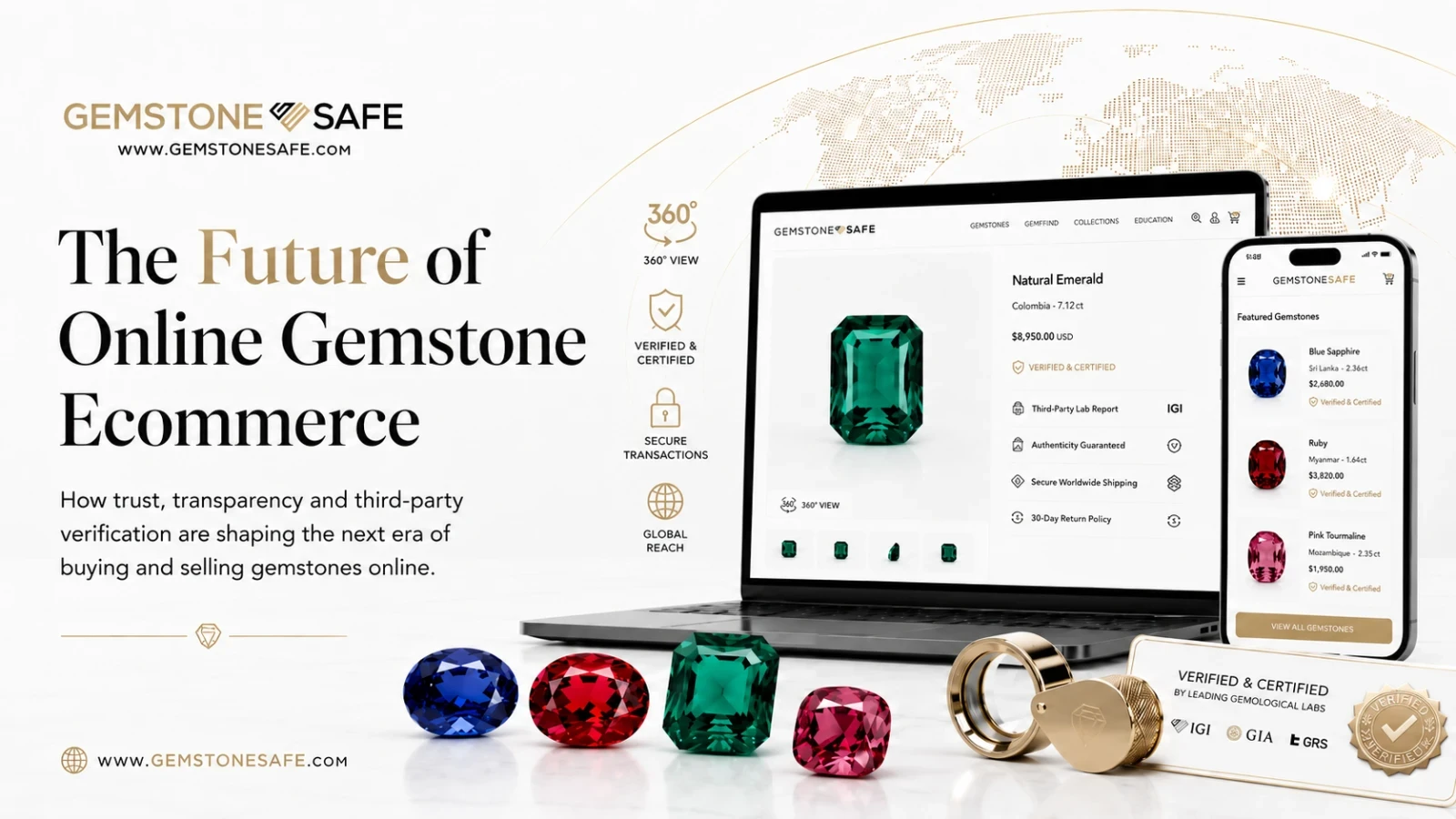
The next phase of gemstonesafe ecommerce will likely be defined by better tools for closing the trust gap remotely: higher-resolution 360-degree imaging, augmented reality try-on features, live video verification calls, and more standardized, searchable listing formats that make comparison easier across sellers. Expect marketplaces to increasingly bake in structured disclosures treatment status, origin, and grading rather than leaving them to seller discretion.
Why Gemstone Ecommerce Is Inevitable
The move online isn't optional for the industry it's a function of where buyers already are. Younger buyers discover gemstones through social media first and expect the same convenience, price transparency, and instant access they get from every other category they shop. Sellers who ignore this shift lose access to the fastest-growing part of the market; those who adapt gain a global buyer base no physical storefront could reach. Convenience, reach, and buyer behavior all point the same direction.
Why Third-Party Verification Is a Game Changer
If distance and trust are the industry's central problems, independent third-party verification is the most direct answer to both. When a neutral gemologist or lab confirms a stone's identity, treatment status, and origin before a sale rather than relying solely on a seller's word buyers gain the confidence to purchase without seeing the stone in person, and honest sellers gain a credible way to stand out from listings that lack any independent backing. As verification becomes more accessible and more expected by buyers, it's positioned to become the foundation online gemstone ecommerce is built on, rather than an optional add-on.

Final Thoughts
| Online gemstone ecommerce is still working out its growing pains, but its direction is clear. The winners in this next phase won't just be the sellers with the best inventory they'll be the platforms and dealers who close the trust gap first, with transparency and independent verification leading the way. |