Sapphires are the "monarchs" of the colored gemstone world. While many think exclusively of blue, this variety of the mineral corundum comes in nearly every color of the rainbow—each with its own lore, chemical fingerprint, and market value.In this guide, we’ll explore the sapphire’s journey from the deep earth to the jeweler’s bench, focusing on what makes a stone truly world-class in 2026.
1. The Spectrum of Sapphire: Colors and Types
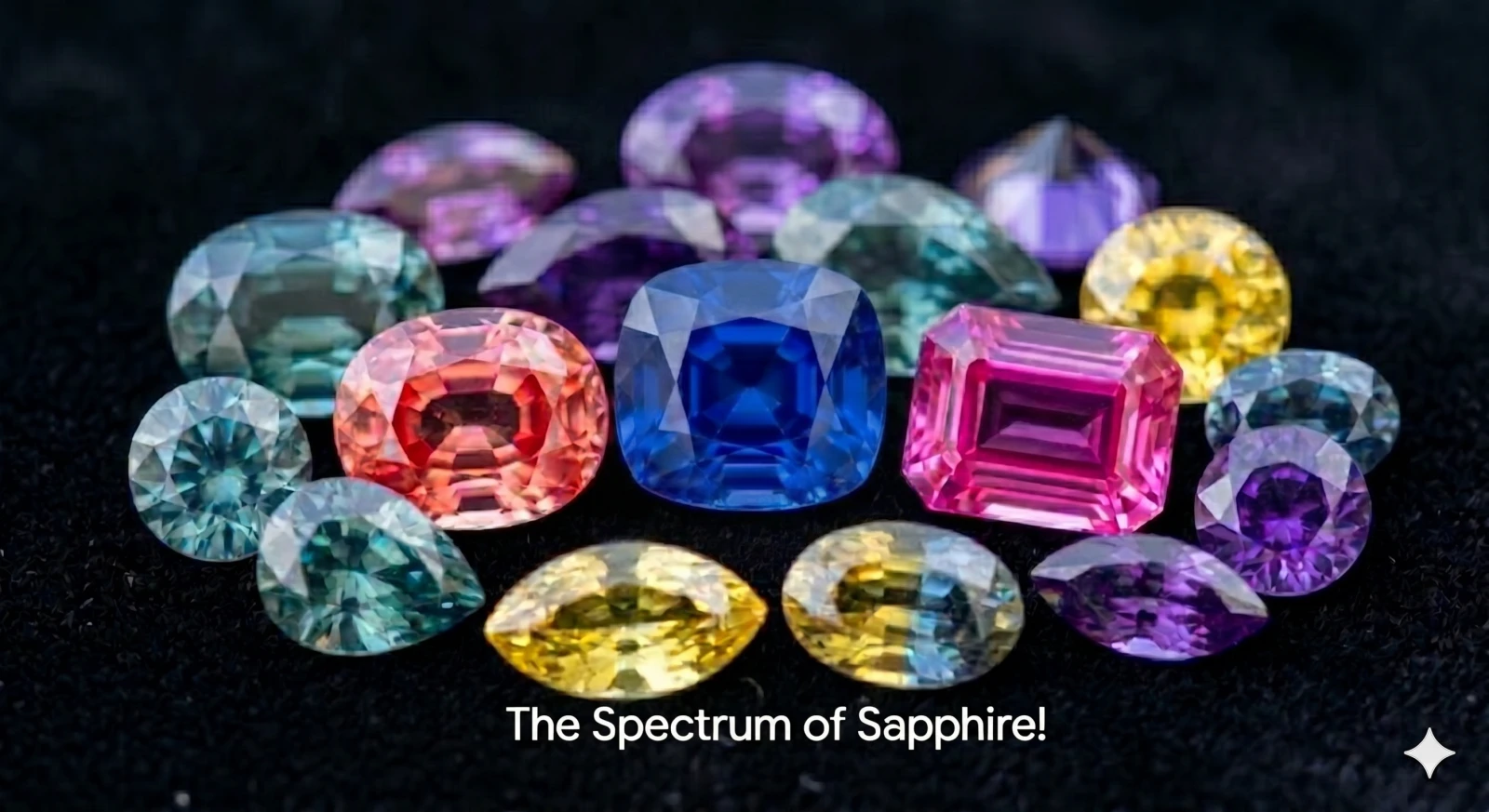
Sapphire is defined by its variety. In the gemological world, any gem-quality corundum that is not red (which is a ruby) is classified as a sapphire.
-
Blue Sapphires: The classic choice. The most prized are "Cornflower Blue" (a velvety, medium-blue) and "Royal Blue" (a deep, vivid saturation).
-
Padparadscha Sapphires: The undisputed "star" of 2026. This salmon-colored gem must possess a delicate balance of pink and orange—reminiscent of a tropical sunset. It is the rarest and often most expensive fancy variety.
-
Fancy Sapphires: These include yellow, purple, orange, green, and even colorless (Leucosapphire).
-
Parti and Teal Sapphires: A major 2026 trend. Parti sapphires show two or more distinct colors in a single crystal (color zoning), while Teal sapphires offer a moody blue-green mix.
-
Star Sapphires: These display asterism, a six-rayed star effect caused by tiny needle-like inclusions of rutile.
2. Value Drivers: Color and Origin
As of 2026, the sapphire market is driven heavily by provenance (origin) and the purity of treatment.
Most Valuable Colors
-
Padparadscha: Due to extreme geological rarity, high-quality Padparadscha can rival the price of top-tier rubies.
-
Royal Blue: Particularly unheated stones with high saturation.
-
Vivid Pink: Increasingly popular as an alternative to pink diamonds, with "hot pink" fetching the highest premiums.
Most Valuable Origins
Where a stone was born significantly impacts its "Investment Grade" status:
-
Kashmir: The "Holy Grail." These stones are essentially extinct in mines, found only at auctions. They are prized for their "sleepy" or "velvety" appearance.
-
Burma (Mogok): Famous for "Royal Blue" stones with an almost electric saturation.
-
Ceylon (Sri Lanka): The most consistent source for bright "Cornflower" blues and the legendary Padparadscha.
-
Madagascar: A modern powerhouse producing stones that frequently rival Burmese quality.
3. Gemological & Chemical Properties
What makes a sapphire so durable and brilliant? It comes down to its atomic structure.
-
Chemical Formula: $Al_2O_3$ (Aluminum Oxide).
-
Hardness: 9 on the Mohs scale. Only diamond is harder, making sapphire ideal for daily-wear jewelry.
-
Refractive Index: 1.760 – 1.772. This high RI gives sapphire its distinctive "vitreous" (glass-like) luster.
-
The "Secret" Ingredients: Pure corundum is colorless. Trace elements (chromophores) create the colors:
-
Iron + Titanium = Blue
-
Chromium = Pink (and Red in Rubies)
-
Iron = Yellow/Green
-
Vanadium = Purple/Color-change
-
4. Masterful Cuts: Maximizing the Soul of the Stone
Unlike diamonds, which are cut to a mathematical standard for "sparkle," sapphires are cut to maximize color.
-
Oval and Cushion Cut: The most popular for high-end stones. These shapes best follow the natural "barrel" shape of the raw sapphire crystal, preserving weight and concentrating color.
-
Emerald and Asscher Cut: These "step cuts" feature long, flat facets that act as windows. They are reserved for stones with exceptional clarity, as they highlight the depth of the color rather than hiding inclusions with sparkle.
-
Round Brilliant: Excellent for smaller stones or lighter-colored sapphires to increase "fire" and brilliance.
-
Cabochon: A smooth, domed polish used to reveal the star in Star Sapphires or to give a soft, glowing look to stones with unique inclusions.
Buying Tip for 2026
Whether you are buying a "Cornflower Blue" from Pakistan or a vivid pink from Madagascar, always prioritize transparency. In today's market, natural, unheated stones carry a 30% to 50% premium over heated ones because they represent the gem in its pure, natural state.
At GemstoneSafe, we ensure that every sapphire is physically verified for treatment and origin, allowing you to invest in these earth-mined treasures with total confidence.